What Is Invisalign for Working Adults?
Invisalign for adults going back to the office is clear aligner treatment built around a working schedule. You wear a series of custom, removable trays that shift teeth gradually, then take them out for meals, coffee, and headshots. At conversational distance, most colleagues never notice them. Everything is planned digitally before you start.
Hybrid and in-person work changed the math for a lot of professionals. Suddenly you’re back in conference rooms, on client calls, and in front of a camera several times a week. Straightening your teeth with visible hardware feels like a big ask when your face is your job.
That’s exactly why adult aligner treatment has grown so quickly. Invisalign clear aligners are made from smooth, transparent medical-grade plastic. They sit close to the teeth, and they come out in seconds when you want them out. Adults across Peoria ask about them for exactly that reason.
According to Align Technology, Invisalign is the most doctor-recommended clear aligner brand, with treatment data going back to the late 1990s. That track record matters when you’re deciding whether to commit a year or more of your life to a plan.
Something else worth knowing: adult orthodontics is completely normal. The American Association of Orthodontists notes that teeth can be moved at nearly any age as long as the supporting bone and gum tissue are healthy. Age isn’t the deciding factor. Health is.
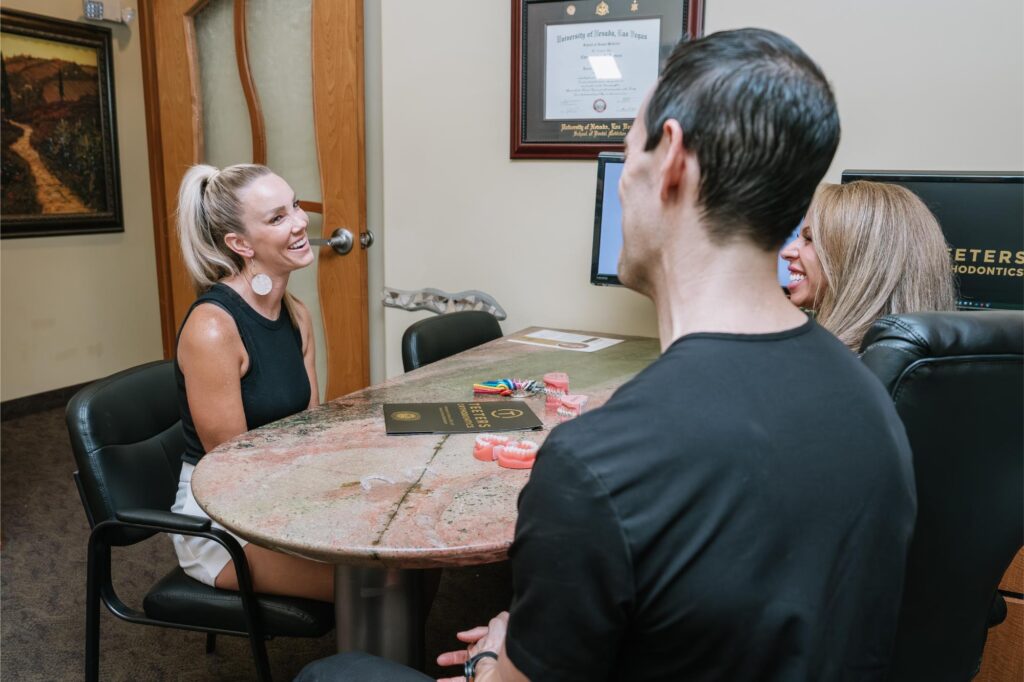
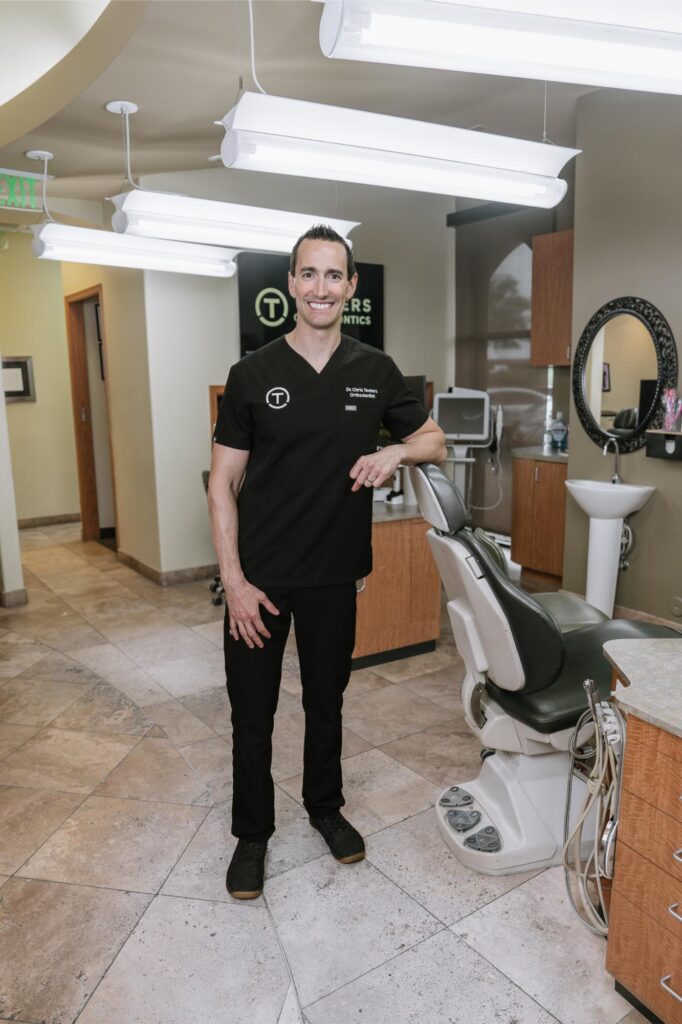
At Teeters Orthodontics in Peoria, adult cases get their own kind of planning. Dr. Christopher Teeters looks at your bite, your existing dental work, your travel schedule, and how much visibility your job demands. A traveling sales director and a remote software engineer don’t need identical plans, and they shouldn’t get them. Our Peoria office has cared for local families since 1978, a legacy of excellence that still shapes how every adult case gets mapped out today. Dr. Teeters is also board certified by the American Board of Orthodontics.
How Does Invisalign Work Around a Work Schedule?
Invisalign treatment starts with a free consult and digital scans, followed by a custom plan you can preview before committing. You wear each set of Invisalign clear aligners 20 to 22 hours a day, switching to the next set roughly every one to two weeks. Check-ins happen every several weeks, and retainers hold your teeth afterward.
Here’s how it typically unfolds:
- Free consult and digital scan. No goopy trays. A handheld scanner captures your teeth in a few minutes, along with digital photos and digital X-rays.
- Treatment plan preview. Dr. Teeters maps out the tooth movements and shows you a digital simulation of where your smile is headed.
- Aligner delivery. Your custom trays arrive. You’ll learn how to seat them, remove them, and clean them properly.
- Progressive aligner changes. Each set moves teeth a small amount. You advance on the schedule Dr. Teeters sets, usually every one to two weeks.
- Retention. Once teeth are where they belong, retainers keep them there for good.
How Do Appointments Fit Into a Work Week?
Most adults come in every six to ten weeks for a quick progress check. Those visits are short. Many patients book early morning appointments at our Peoria office or use a virtual consultation option for routine check-ins, which cuts down on time away from the desk. If your calendar shifts mid-treatment, Team Teeters can usually move a check-in without disturbing the aligner schedule you’re already on.
What Should You Expect Day to Day?
Aligners come out for every meal, every coffee, and every glass of anything other than water. Then you brush and pop them back in. Adults who keep a travel toothbrush in a bag or desk drawer adapt fastest. A small case in that same bag keeps trays off restaurant napkins and out of the trash, which is where most lost aligners end up.
Small tooth-colored attachments may be bonded to a few teeth to give the trays something to grip. They’re subtle. Edges of the trays can also be trimmed and polished if a spot feels rough.
Speech is the question everyone asks about. Some people notice a slight lisp on certain sounds for the first few days while the tongue adjusts. It resolves quickly for almost everyone, and reading aloud in the car speeds it up.
Adult treatment commonly runs somewhere between six and eighteen months, depending on how much movement is needed.
What Are the Benefits of Invisalign for Adults at Work?
Clear aligners solve a specific set of workplace problems. Here’s what adults tell us matters most:
- Discreet in meetings and on camera. On a video call, aligners are effectively invisible. In person, most people won’t register them unless you point them out.
- Removable when it counts. Client lunches, networking events, conference panels, professional headshots. Trays come out, go in a case, and go back in afterward.
- No wire emergencies. There’s no bracket to pop off before a Monday presentation and no poking wire that forces a same-day appointment.
- Easier hygiene. You brush and floss normally with nothing in the way, which supports gum health, especially for adults with crowns, bridges, or veneers already in place.
- Predictable planning. The digital preview means you know the general timeline before you say yes. That helps when you’re planning around a wedding, a promotion, or a relocation.
- Long-term dental benefit. Straighter teeth are easier to keep clean and wear more evenly than crowded or misaligned teeth.
There’s a confidence factor too, and it’s not vanity. When you stop covering your mouth in photos or angling away from the camera, people notice the difference in how you carry yourself.
One more practical note. Adults who had metal braces as teenagers and skipped their retainers often see teeth drift back over the years. Correcting that relapse is one of the most common adult cases we see in Peoria, and it’s frequently on the shorter end of the treatment range.
Invisalign vs. Metal Braces vs. Clear Braces for Adults
All three options straighten teeth. They just get there differently.
| Factor | Invisalign clear aligners | Metal braces | Clear braces |
|---|---|---|---|
| Visibility | Nearly invisible up close | Most noticeable | Low visibility, brackets are tooth-colored |
| Removable | Yes, for meals and events | No | No |
| Typical adult timeline | About 6 to 18 months | Often 12 to 24 months | Often 12 to 24 months |
| Hygiene | Brush and floss normally | Requires threaders and extra time | Requires threaders and extra time |
| Office visits | Every 6 to 10 weeks, virtual options available | Every 4 to 8 weeks | Every 4 to 8 weeks |
| Best suited for | Mild to moderate crowding, spacing, relapse, minor bite correction | Complex bite corrections, cases needing full control | Adults wanting a fixed option with less visible hardware |
| Compliance required | High, you must wear them | None, they’re always working | None, they’re always working |
Metal braces remain the most controlled option for complex cases. When a bite needs significant correction or teeth need major rotation, fixed appliances give Dr. Teeters more precise control over each movement. They also keep working whether or not you remember to do anything.
Clear braces sit between the two. Tooth-colored brackets are less noticeable than metal, and because they’re bonded on, there’s no wear-time discipline involved. Adults who travel constantly or know they’d misplace trays often consider this route.
Invisalign clear aligners offer the most discretion and the most flexibility. The trade-off is straightforward: they only work when they’re in your mouth. Twenty-two hours a day is the goal, and adults who can’t commit to that will get better results with metal braces or clear braces.
An exam settles it. Bite relationship, root position, and existing dental work all influence which option delivers a stable result that holds up over time.
How Much Does Invisalign Cost for Adults?
Invisalign cost for adults depends on three main things: how complex your case is, how long treatment takes, and how many aligners your plan requires. A short relapse case costs less than a full bite correction. Insurance benefits, FSA and HSA dollars, and monthly financing all reduce what you pay up front.
Factors that move the number:
- Crowding or spacing severity. More movement means more aligners and more time.
- Bite issues. Overbites, underbites, and crossbites add complexity to the plan.
- Refinements. Some cases need a second round of trays to fine-tune the finish.
- Retainers. Retention is part of the total picture, and it’s not optional if you want the result to last.
- Existing dental work. Crowns, implants, and bridges can affect how teeth are moved.
How Does Insurance Apply to Adult Treatment?
Many dental plans include a lifetime orthodontic benefit that applies to adults, not just dependents. Check your specific policy language. FSA and HSA funds generally cover orthodontic treatment as well, which lowers your real cost using pre-tax dollars.
What Do Payment Options Look Like?
Teeters Orthodontics accepts most insurance plans and offers in-house 0% financing, so treatment can be spread across monthly payments without interest charges stacking up. Team Teeters will show you the exact monthly number before you commit to anything, along with what your benefit covers and when it renews.
Skip the national average figures you’ll find online. Those ranges run absurdly wide, most of them are years out of date, and none of them reflect your teeth. A free consult at our Peoria office gives you an exact figure for your case, including what insurance covers and what the monthly payment looks like.
Are You a Candidate? Invisalign Considerations for Adults
Most working adults who want straighter teeth are candidates for Invisalign. The question is whether aligners are the best tool for your particular bite.
Typically strong candidates:
- Mild to moderate crowding
- Gaps and spacing between teeth
- Relapse after childhood braces
- Minor overbite, underbite, or crossbite
- Adults who want a discreet option and will actually wear the trays
Cases that need a closer look:
- Severe bite discrepancies or skeletal jaw issues that may call for orthognathic surgery
- Significant tooth rotations, particularly on premolars and canines
- Teeth that need substantial vertical movement
- Multiple missing teeth or extensive restorative work in progress
Before starting, you’ll need:
- Healthy gums with no active periodontal disease
- Any cavities treated
- Stable existing dental work, since crowns and veneers respond differently than natural enamel
Compliance is the honest deciding factor. Adults who know they won’t keep trays in for 20 to 22 hours a day usually do better with metal braces or clear braces, and Dr. Teeters will say so directly rather than sell you a plan that won’t work.
What Happens at Your Free Consult?
Your first visit takes about an hour. Team Teeters captures digital scans, digital photos, and digital X-rays, then Dr. Teeters examines your bite and reviews your options. You’ll leave knowing whether you’re a candidate, roughly how long treatment would take, and what it costs. Virtual consultations are available if you’d rather start from your desk instead of driving over to Peoria. Nothing gets ordered until you say yes.
Dr. Teeters is board certified by the American Board of Orthodontics, an active member of the American Association of Orthodontists, and an experienced Invisalign provider. Colleagues call him “the doctor’s doctor,” which means the plan you get is built on judgment, not software defaults.

Frequently Asked Questions About Adult Invisalign
Will people notice my aligners on video calls or in meetings?
Almost never. Invisalign clear aligners are transparent and fit tightly against the teeth, so on a webcam they’re effectively invisible. In person, people occasionally notice a slight shine at close range. If a moment truly matters, you can take them out for the meeting and put them right back in.
How long does Invisalign take for adults?
Adult treatment commonly runs about six to eighteen months, though timelines vary with case complexity. Simple spacing or relapse cases finish faster. Bigger bite corrections take longer. Dr. Teeters gives you a specific estimate at your free consult after reviewing your digital scans, and he’ll flag anything in your bite that could stretch that window.
Can I drink coffee with Invisalign in?
No. Hot coffee can warp the plastic, and both coffee and tea stain trays quickly. Take your aligners out, enjoy your drink, rinse or brush, then put them back in. Plain water is the only thing you can drink with trays in place.
Does Invisalign affect how I speak in presentations?
Some adults notice a mild lisp on “s” sounds during the first few days with a new set. It fades fast as your tongue adapts. If you have a major presentation coming up, start a new tray a few days beforehand rather than the night before, and practice speaking out loud to speed the adjustment.
Am I too old for Invisalign or braces?
No. The American Association of Orthodontists confirms that healthy teeth can be moved at virtually any age. What matters is gum health and bone support, not the year on your driver’s license. Adults in their forties, fifties, and beyond complete treatment successfully all the time, and plenty of them do it at our Peoria office alongside their own kids.
Will I need a retainer after treatment ends?
Yes, and this part is non-negotiable. Teeth naturally drift throughout life, which is why so many adults seek treatment a second time. Wearing your retainer as directed protects the investment you just made. Dr. Teeters will walk you through a retention plan built for your case, including how often to wear it once the first year is behind you.